

Autonomous vehicles represent one of the most transformative innovations in modern transportation. These self-driving cars rely on a complex network of sensors, cameras, and algorithms to perceive and interpret their surroundings. At the heart of this technology lies optical systems, which enable vehicles to “see” the world with remarkable precision.
Through advanced optics, autonomous vehicles can detect obstacles, interpret traffic signals, and navigate safely without human input. As optical science advances, its integration into autonomous systems continues to push the boundaries of mobility, safety, and efficiency.
How Optical Systems Support Autonomous Driving

Optical systems are fundamental to the vision and perception layers of autonomous vehicles. They gather visual and spatial data, allowing the vehicle to build a detailed, real-time understanding of its environment. Several key technologies contribute to this process:
1. Cameras
High-resolution cameras capture visual information much like human eyes do. They help recognize lane markings, pedestrians, signs, and traffic lights. Vehicles typically use multiple cameras placed around the car to achieve a 360-degree view, enhancing depth perception through stereoscopic imaging.
2. LIDAR (Light Detection and Ranging)
LIDAR systems use laser pulses to measure distances and create precise 3D maps of the surroundings. These systems can detect objects even in low-light conditions, making them crucial for night driving or complex urban environments.
3. Infrared Sensors
Infrared (IR) technology helps vehicles detect heat signatures, allowing them to spot living beings—such as pedestrians or animals—even in darkness or fog. IR imaging enhances safety by extending visibility beyond the range of visible light.
4. Computer Vision Systems
Once visual data is captured, computer vision algorithms interpret it. These algorithms use pattern recognition and deep learning to classify objects, track their movements, and predict their behavior.
Key Components and Their Functions
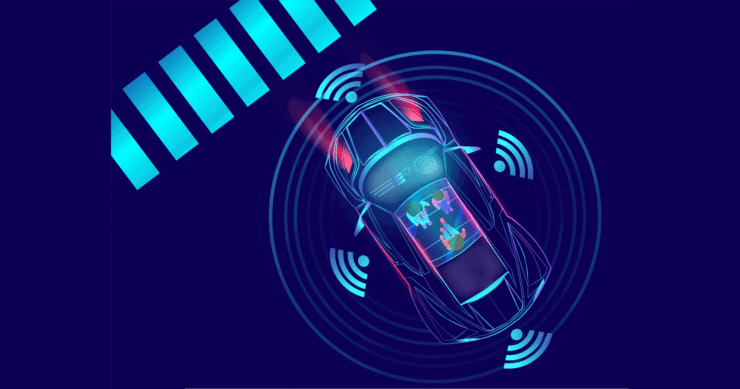
An autonomous vehicle’s optical system integrates various components that work together seamlessly. Each plays a distinct role in ensuring accuracy, clarity, and reliability in data acquisition.
Lenses
Optical lenses focus light onto sensors with high precision. Their design—focal length, curvature, and material—determines how well a system captures distant or close-range objects. Wide-angle lenses, for instance, are often used for front and rear cameras to maximize the field of view.
Mirrors
Specialized mirrors are used to redirect light within compact optical assemblies. In LIDAR systems, rotating mirrors enable scanning across multiple directions, helping create comprehensive 3D environmental maps.
Image Sensors
These are the “retinas” of optical systems, converting light into electronic signals. Complementary Metal-Oxide-Semiconductor (CMOS) sensors are widely used because they provide fast image processing and energy efficiency.
Optical Filters
Filters enhance the quality of captured data by blocking unwanted wavelengths, such as glare from sunlight. They ensure that sensors receive clear and relevant information for processing.
Optical Fibers
In certain vehicle architectures, optical fibers transmit data or light signals between components without electromagnetic interference, maintaining signal integrity in noisy environments.
These components must be meticulously aligned and calibrated to achieve optimal performance. Even slight misalignments can affect image quality or sensor accuracy, highlighting the precision required in optical engineering for autonomous systems.
Future Trends and Innovations
The future of optical systems in autonomous vehicles is bright and rapidly evolving. Several trends are shaping the next generation of automotive optics:
1. Sensor Fusion
Instead of relying on a single sensor type, autonomous vehicles increasingly use sensor fusion—combining data from cameras, radar, and LIDAR to create a unified perception model. This integration improves accuracy and resilience under challenging conditions.
2. AI-Powered Vision Systems
Artificial intelligence and deep learning are enhancing optical data interpretation. Advanced neural networks can distinguish between thousands of object types and predict movement patterns, making decision-making faster and safer.
See also : Smarter Headlights: How Adaptive Lighting Transforms Modern Driving
3. Solid-State LIDAR
Traditional LIDAR systems use moving parts for scanning, but solid-state designs remove these components, increasing durability and reducing cost. Compact solid-state LIDARs are expected to become standard in future vehicles.
4. Quantum and Holographic Optics
Emerging optical technologies such as holographic sensors and quantum imaging promise ultra-high sensitivity and resolution, potentially allowing vehicles to “see” around corners or through fog.
5. Energy Efficiency and Miniaturization
Engineers are also working to make optical systems smaller, lighter, and more energy-efficient. Advances in materials like metasurfaces and nanophotonics will enable powerful optics in compact designs.
6. Integration with V2X Communication
Optical systems may soon collaborate with Vehicle-to-Everything (V2X) communication technologies, allowing cars to exchange optical data with traffic lights, infrastructure, and other vehicles for synchronized driving.
Together, these innovations signal a future where optical systems are not just tools for perception, but intelligent agents capable of real-time collaboration and adaptation.
Optical systems play an indispensable role in the evolution of autonomous vehicles. As research continues to refine optical performance and integrate it more deeply with intelligent systems, the dream of fully autonomous vehicles is moving closer to everyday reality—powered by the precision and insight of modern optical science.
Frequently Asked Questions
What are optical systems in autonomous vehicles?
They are visual and light-based technologies like cameras, LIDAR, and sensors that help cars perceive their environment.
Why are optical systems important?
They enable vehicles to detect obstacles, read signs, and navigate safely.
How does LIDAR work?
It uses laser pulses to measure distances and create 3D maps.
What are the main challenges?
Weather, glare, and data overload can reduce accuracy.
Are optical systems expensive?
Yes, especially LIDAR, though costs are dropping.