

The optical industry has changed quickly, and it now offers more than just basic glass or plastic lenses. These days, every well-known brand provides a range of cutting-edge coatings, each of which promises a unique answer to a certain visual issue. With the correct coating, problems like nighttime driving glare or screen fatigue can be resolved.
It’s critical to differentiate coatings that are merely extra features from those that actually improve optical performance. Anti-reflective coatings, for instance, can greatly increase contrast and lessen glaring reflections. To assist you in selecting the coating formulation that best fits your lifestyle and particular visual requirements, this article will compare popular coating formulations.
6 Comprehensive Lens Coating Technology Comparisons
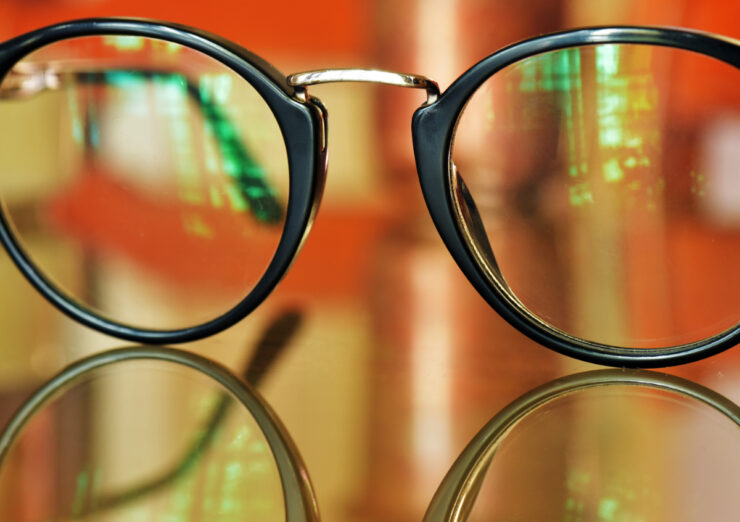
Today, selecting the best eyeglass lenses involves considering coating technology in addition to vision correction. Understanding the various kinds of lens coatings is crucial since they each have unique advantages. Less familiar lens coating systems will be compared in general in the discussion that follows.
1. Standard lenses and ultraviolet protective coatings
Without any extra coatings, regular eyeglass lenses basically only correct eyesight. Sadly, these glasses have no defense against damaging UV rays and often reflect too much light.
The use of an ultraviolet protective layer, however, is a significant advancement. By acting as a shield, this thin layer successfully prevents UV radiation that is invisible from entering the eyes. Selecting lenses with UV coatings is a smart move to keep your health in check.
2. Both non-mirror and mirror coatings
The purpose of non-mirror coating is to enhance the quantity of light that may pass through. For work requiring a high level of detail or accuracy, this guarantees the best possible visual acuity and color contrast.
Conversely, mirror coating reduces brightness by reflecting some of the light, which lowers the overall quantity of light that reaches the eye. This has the benefit of being comfortable in direct sunshine. Non-mirror coating is a superior option in low light.
3. Non-coated lenses and anti-fog coating
Anti-fog coatings, often referred to as anti-fog coatings, have become a modern answer to the fogging issue that many people who wear masks and glasses encounter, particularly in extremely hot or cold weather. By uniformly dispersing water vapor into an extremely thin layer, these lenses provide clear vision and reduce the chance of collisions while driving.
In contrast, uncoated lenses lack this protection, which leads to the accumulation of water vapor on the surface in the form of big droplets. The user’s comfort and safety throughout regular tasks are strongly impacted by this fundamental difference, particularly in cold or humid environments.
4. Comparing hydrophobic and non-hydrophobic coatings
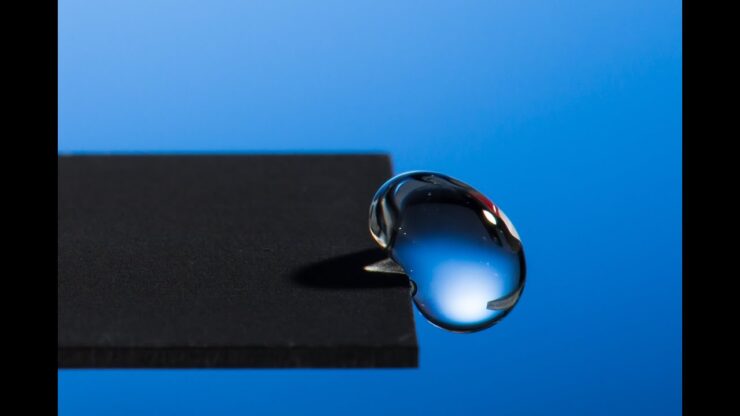
When comparing hydrophobic and non-hydrophobic coatings, lens coating technology is now a critical component of visual quality. Cleaning uncoated lenses every day is a pain because they frequently fog up and get contaminated with water.
Hydrophobic coatings, on the other hand, work well to repel liquids and transform water droplets into tiny, spherical shapes that are easy to remove. By lowering friction during cleaning, this effect not only helps preserve image quality when wet but also increases the lens’s lifespan, adding value over time.
5. Neutral lenses and color-enhancing coating
Our perception of the world has been altered by lens coating technologies, particularly when contrasting neutral and color enhancement coatings. Coatings for color enhancement are made especially to improve contrast and add richness to particular color spectrums. Usually, this makes things look crisper and brighter.
Neutral lenses, on the other hand, seek to correctly and distortion-free maintain the environment’s natural hues. The user’s preference—whether they want more accurate color reproduction or brighter colors—will determine which of these two lens types they choose.
See also : Precision Tools: The Must-Have Optical Devices for Professionals
6. Polarized and non-polarized coatings
Polarized lenses work similarly to tiny blinds that are positioned vertically inside the lens material. Strong glare is produced when sunlight gets horizontally polarized as it bounces off a flat surface. These horizontal light waves are deliberately blocked by polarized filters, so that only the healthy vertical light reaches your eyes. Particularly in extremely bright sunlight, this leads to improved eyesight and a significant reduction in eye strain.
Non-polarized lenses offer their own benefits as well. Effectively reducing glare is their main purpose. In the event that the lenses include a UV protective coating, they shield the eyes from UV rays and lessen the intensity of arriving light. They are thus sufficiently at ease in a variety of light environments. Furthermore, there is no risk of visual impairment from using digital screens.
In conclusion, the strength and ability to lessen reflections are the two main distinctions between lens coatings. It is evident that multi-layer technology outperforms single-layer technology in terms of anti-reflection.
The various needs of the user have a big impact on the technology selection, whether it’s for daily use where scratch resistance is crucial or professional photography that demands the best light transmission. The amount of money spent should match the aesthetic advantages that are offered.
Frequently Asked Questions
What is ultraviolet protection on lenses mostly used for?
UV protection effectively prevents damaging UV rays from getting into your eyes by acting as a thin coating.
How do lenses that have anti-fog protection work?
In order to keep fog from forming, anti-fog protection evenly distributes moisture into a very thin layer.
At what point do color-enhancing lenses outperform neutral ones?
Enhancing contrast and quality within a certain color spectrum is the preferred use for color-enhancing protection.
Is there a disadvantage to wearing polarized lenses?
Indeed, in contrast to non-polarized glasses, there is a chance of visual disturbances when using digital screens.