

Top 10 Universities for Optical Science and Engineering Degrees Worldwide

In the modern technological era, Optical Science plays a central role in innovations that shape how we communicate, diagnose diseases, and explore the universe. From fiber-optic communication and laser technology to medical imaging systems and quantum photonics, optical science fuels advancements across multiple disciplines.

As industries increasingly rely on light-based technologies, the demand for professionals trained in optical science and optical engineering has surged, making this field an exciting and future-proof area of study.

Universities for Optical Science Degrees
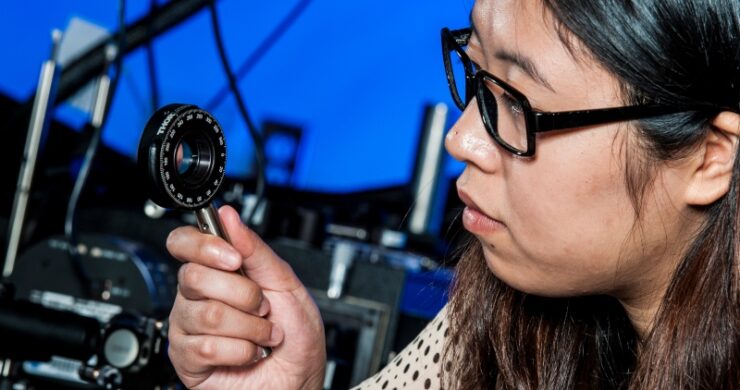
Below are ten of the world’s leading universities recognized for excellence in optical science education, cutting-edge research, and outstanding career opportunities for their graduates.

1. University of Rochester – Institute of Optics (USA)

Location: Rochester, New York

Academic strengths: Established in 1929, the Institute of Optics is one of the first academic centers dedicated solely to optics. It offers specialized degrees at all levels focusing on optical design, lasers, imaging, and photonics.

Research facilities: The university hosts advanced labs for optical fabrication, laser energetics, and imaging science.

Career opportunities: Graduates are sought after in industries related to optics manufacturing, defense technologies, and optical instrumentation.

2. Stanford University – Department of Applied Physics (USA)
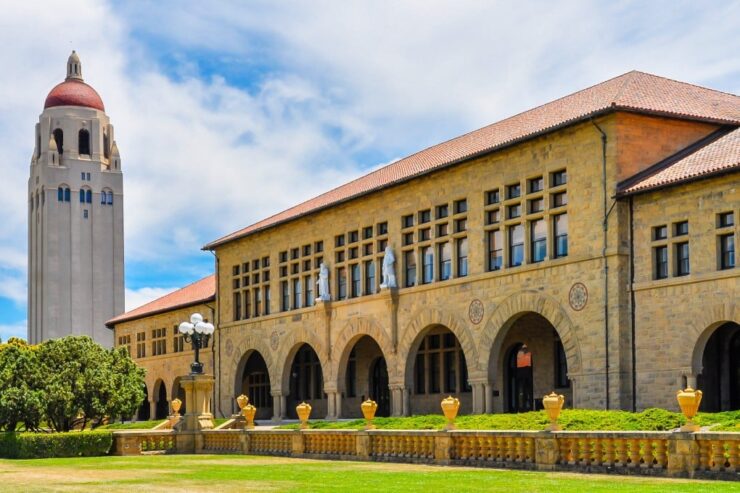
Location: Stanford, California

Academic strengths: Stanford is renowned for its interdisciplinary approach, combining optical science with applied physics and electrical engineering.

Research facilities: The Stanford Nanofabrication Facility supports research in nanophotonics, integrated optics, and quantum light systems.

Career opportunities: Alumni frequently enter tech giants, startups, and national research centers focused on optical technologies and quantum computing.

3. Massachusetts Institute of Technology (MIT) – Research Laboratory of Electronics (USA)

Location: Cambridge, Massachusetts

Academic strengths: MIT emphasizes innovation and application, with optical science integrated into its electrical engineering and materials programs.

Research facilities: The Research Laboratory of Electronics and Microphotonics Center lead projects in laser development, optical communications, and photonic integration.

Career opportunities: Graduates often pursue roles in R&D, data communications, imaging technology, and academic research.

4. University of Arizona – College of Optical Sciences (USA)

Location: Tucson, Arizona

Academic strengths: One of the largest optical science colleges worldwide, known for hands-on optical engineering and imaging science programs.

Research facilities: Equipped with cutting-edge labs for optical metrology, lens design, and adaptive optics, plus collaborations with major observatories.

Career opportunities: Alumni find roles in aerospace, defense, medical imaging, and telescope design.

See also : Exploring Career Growth in Optical Engineering

5. Imperial College London – Department of Physics (UK)

Location: London, England

Academic strengths: Imperial is a European leader in photonics, fiber optics, and laser systems. The program bridges fundamental physics with practical applications.

Research facilities: Home to the Photonics Research Group and extensive collaborations with European industry partners.

Career opportunities: Graduates often join telecommunications, biomedical optics, and energy-related industries across the UK and Europe.

6. Tsinghua University – Department of Electronic Engineering (China)

Location: Beijing, China

Academic strengths: Tsinghua’s optical science program combines rigorous theoretical study with practical applications in optoelectronics and laser technology.

Research facilities: Supported by national laboratories focusing on integrated photonics and optical communications.

Career opportunities: Graduates lead in Asia’s rapidly expanding sectors like telecom, semiconductor optics, and quantum photonics research.

7. University of Southampton – Optoelectronics Research Centre (UK)

Location: Southampton, England

Academic strengths: A global leader in photonics and fiber optics research. The Optoelectronics Research Centre (ORC) pioneered key technologies in laser and optical fiber development.

Research facilities: Extensive fiber fabrication facilities and high-power laser labs used by both students and industrial partners.

Career opportunities: Graduates often join companies specializing in optical communications, photonic devices, or defense research.

8. University of California, Santa Barbara (UCSB) – Materials & Electrical Engineering (USA)

Location: Santa Barbara, California

Academic strengths: UCSB integrates materials science with optical engineering, emphasizing photonic materials, semiconductor lasers, and integrated optics.

Research facilities: The California NanoSystems Institute supports interdisciplinary research in quantum photonics and optical nanostructures.

Career opportunities: Alumni find positions in leading photonics firms, semiconductor companies, and startups developing laser-based devices.

9. California Institute of Technology (Caltech) – Division of Physics, Mathematics, and Astronomy (USA)

Location: Pasadena, California

Academic strengths: Caltech offers a highly research-focused program with deep exploration in laser physics, optical instrumentation, and fundamental photonics.

Research facilities: Access to the Kavli Nanoscience Institute and collaborations with NASA’s Jet Propulsion Laboratory for space-based optical systems.

Career opportunities: Many graduates pursue advanced research or join aerospace and high-tech companies developing next-generation optical systems.

10. University of Cambridge – Cavendish Laboratory (UK)

Location: Cambridge, England

Academic strengths: Cambridge provides a strong foundation in optical physics, quantum optics, and imaging technology, blending theory with experimental methods.

Research facilities: The Cavendish Laboratory and Nanophotonics Centre offer world-class environments for optical research.

Career opportunities: Graduates often pursue academic research, work in imaging and photonics startups, or join international technology firms.

As global industries continue to depend on light-based technologies for data transmission, sensing, and energy, experts in optical science and engineering will remain in high demand. With the right mix of technical expertise and creative vision, graduates in optical science will continue to illuminate the future of technology and discovery.

Frequently Asked Questions

What is Optical Science?

Optical Science studies how light behaves and interacts with matter, forming the foundation for technologies like lasers, imaging, and fiber optics.

Which universities are best for Optical Science?

Top institutions include the University of Rochester, MIT, Stanford, University of Arizona, Imperial College London, and Tsinghua University.

What careers can graduates pursue?

Graduates work in photonics, telecommunications, aerospace, defense, and medical imaging.

Is Optical Science highly technical?

Yes, it involves physics, mathematics, and engineering skills.

Why study Optical Science now?

Because light-based technologies drive innovation in communication, healthcare, and quantum research.

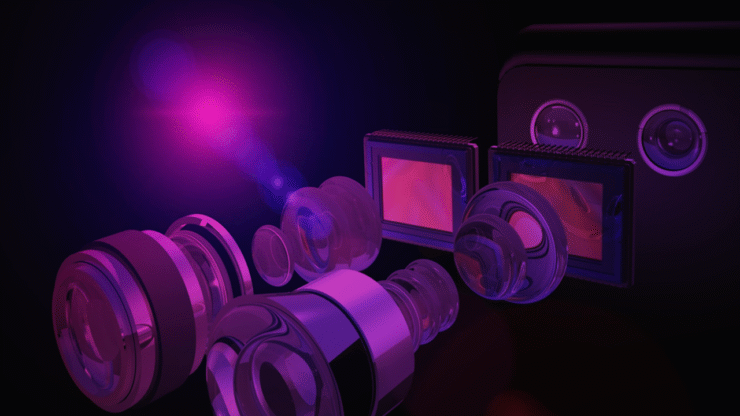
Top Skills Every Optical Design Specialist Should Master

Optical design has become a cornerstone of modern technology, driving innovations in fields such as telecommunications, imaging systems, autonomous vehicles, and photonics. Behind every sophisticated lens, telescope, or fiber-optic network lies the expertise of an optical design specialist—a professional who combines physics, engineering, and creativity to transform abstract concepts into practical optical systems.

To excel in this demanding field, one must develop a solid blend of technical and soft skills that ensure precision, innovation, and collaboration across multidisciplinary teams.

Core Technical Skills in Optical Design

The main skills that an optical design specialist must have include:

1. Proficiency in Optical Simulation and Ray Tracing

Ray tracing is at the heart of optical design. It allows specialists to predict how light rays will travel through a system of lenses or mirrors. By simulating these interactions, designers can optimize the performance of optical systems before building physical prototypes.

Software such as Zemax OpticStudio, Code V, and LightTools provides advanced tools for modeling complex optical behavior, from aberration control to illumination uniformity. A strong command of these programs helps specialists test multiple design scenarios, adjust parameters, and identify potential performance issues early in the process.

2. Mastery of Optical Design Software

Beyond ray tracing, modern optical engineers rely heavily on software to streamline their workflows.

  • Zemax OpticStudio excels in lens system optimization and tolerance analysis.
  • Code V offers powerful optimization algorithms and manufacturing support features.
  • LightTools specializes in illumination design for LED lighting, displays, and automotive systems.

Proficiency in at least one of these tools is essential, but familiarity with all three can provide a major competitive advantage. Understanding scripting languages such as MATLAB or Python for automation can also enhance productivity and data analysis.

3. Understanding Optical Materials and Manufacturing Constraints

Selecting the right optical material is crucial. Glass, plastic, and crystal materials all have distinct refractive indices, dispersion properties, and temperature sensitivities. Specialists must know how these factors influence light transmission and system performance.

Additionally, understanding manufacturing tolerances—the small deviations that occur during production—is vital. Designers need to create systems that maintain performance despite these imperfections. A practical understanding of fabrication processes, such as lens molding, coating deposition, and surface polishing, helps ensure that designs can be realistically produced at scale.

4. System Optimization and Performance Analysis

Optimization is the iterative process of refining a design to meet multiple performance objectives—sharpness, efficiency, weight, and cost. Optical design specialists use merit functions and multi-variable optimization algorithms to fine-tune curvature, spacing, and material combinations.

Equally important is the ability to interpret Modulation Transfer Function (MTF), encircled energy, and spot diagrams, which measure how well a system focuses or transmits light.

See also : Top 10 Universities for Optical Science and Engineering Degrees Worldwide

5. Integration with Mechanical and Electronic Systems

In many modern products, optical systems are integrated with electronic sensors and mechanical housings. For instance, a camera lens must align precisely with its image sensor to ensure sharp focus and minimal distortion. Optical design specialists therefore collaborate closely with mechanical and electronic engineers to ensure that alignment tolerances, heat management, and assembly constraints are well accounted for.

Essential Soft Skills for Optical Designers

While technical expertise is indispensable, soft skills often determine how effectively a specialist contributes within a team or leads a project.

1. Communication and Collaboration

Optical systems rarely exist in isolation—they are part of larger mechanical, electronic, or software-driven products. Clear communication allows optical designers to translate complex optical jargon into actionable insights for cross-functional teams. Collaboration also extends to suppliers and manufacturers, ensuring that production aligns with design intent.

2. Analytical Thinking and Problem-Solving

Optical design is a highly iterative process. Unexpected aberrations, tolerance stack-ups, or material inconsistencies can arise at any stage. A strong analytical mindset enables specialists to diagnose issues quickly and find practical, physics-based solutions. The ability to think critically and approach challenges creatively often distinguishes a competent designer from an exceptional one.

3. Continuous Learning and Adaptability

Optical technology evolves rapidly with the advancement of materials science, nanofabrication, and computational imaging. Specialists must stay updated with new methods, such as freeform optics, metasurfaces, and computational holography. Engaging in professional development, attending technical conferences, and reading scientific journals are excellent ways to remain competitive in the field.

4. Attention to Detail and Precision

Optical systems depend on accuracy down to microns. A small deviation in curvature or alignment can drastically degrade performance. Successful optical design specialists exhibit exceptional attention to detail—verifying every parameter, simulation setting, and tolerance specification before finalizing a design.

Optical design specialists play a vital role in advancing technologies that shape our modern world—from precision medical instruments to high-speed communication systems and advanced imaging devices. As industries increasingly depend on light-based innovations, those who cultivate these essential skills will not only design better optical systems but also illuminate the path toward a more connected, intelligent, and visually dynamic future.

Frequently Asked Questions

What does an optical design specialist do?

They design and optimize systems that manipulate light—like lenses, sensors, and lasers—used in imaging, communication, and photonics.

What software is essential for optical designers?

Key tools include Zemax OpticStudio, Code V, and LightTools for ray tracing and system analysis.

Are programming skills necessary?

Yes, basic scripting in MATLAB or Python helps automate simulations and analyze data.

What industries hire optical specialists?

Telecommunications, aerospace, medical imaging, and consumer electronics.

Which soft skills matter most?

Communication, problem-solving, and collaboration.

How can one advance in this career?

By mastering technical tools, staying updated, and gaining interdisciplinary experience.

Exploring Career Growth in Optical Engineering

Optical engineering has become a multidisciplinary field, combining physics, materials science, electrical engineering, and computer science, especially in today’s technological era. Professionals in this field not only design optical instruments but also develop advanced imaging systems, sensors for autonomous vehicles, and photonics-based communication systems.

This article will discuss career growth in optical engineering and provide tips you can apply to help your career grow.

The Expanding Role of Optical Engineers

The role of optical engineers has expanded far beyond traditional applications like lens design and laser technology. With the global growth of photonics and optics-based innovations, engineers are now contributing to fields such as augmented reality, biomedical imaging, defense systems, and quantum computing.

For instance, in the healthcare industry, optical engineers are behind devices like endoscopes, laser-based medical tools, and diagnostic imaging systems. In telecommunications, they help develop faster, more reliable fiber-optic networks. The increasing use of optical sensors in autonomous vehicles also demonstrates how optical engineering supports safer transportation technologies.

This diversification means that career opportunities for optical engineers continue to grow, making it a highly dynamic and rewarding field for those passionate about light-based technology.

Emerging Trends Driving Growth

Several emerging trends are shaping the future of optical engineering careers:

1. Photonics and Quantum Technology

Photonics, the science of light generation and manipulation, is at the heart of new communication and computing technologies. Engineers with expertise in this area are increasingly in demand by research institutions and tech companies.

2. Optical Sensors and Imaging

As industries adopt automation and artificial intelligence, optical sensors play a key role in data collection and environmental monitoring. From drone-based imaging to medical diagnostics, engineers who can design efficient, high-resolution sensors are essential to innovation.

3. AR, VR, and Metaverse Technologies

The development of augmented reality (AR) and virtual reality (VR) devices relies heavily on optical systems that can produce lifelike visuals. Optical engineers are needed to design compact, lightweight, and precise components that enhance user experience in AR/VR headsets and other wearable devices.

4. Sustainable Optical Materials

With increasing awareness of environmental sustainability, researchers are focusing on eco-friendly materials for optical devices. Engineers working on developing durable and recyclable materials for lenses, filters, and sensors are contributing to a more sustainable future in tech manufacturing.

Career Paths in Optical Engineering

Optical engineering offers a variety of career paths across industries. Depending on one’s specialization and interests, here are some common roles:

Optical Design Engineer

Focuses on designing lenses, mirrors, and other components for cameras, telescopes, or sensors.

Laser Engineer

Works on developing laser systems for medical, industrial, or research applications.

Photonics Engineer

Specializes in systems that generate and manipulate light for communication or sensing technologies.

Imaging Systems Engineer

Designs and improves imaging devices used in healthcare, security, and space exploration.

Research Scientist

Conducts studies in optical materials, photonics, and quantum optics, often in universities or government labs.

See also : Top Skills Every Optical Design Specialist Should Master

Optoelectronics Engineer

Integrates optical systems with electronic circuits, such as in fiber-optic communication or display technology.

Skills Required for Career Advancement

To excel in optical engineering, professionals need a blend of technical and soft skills. Technical skills typically include:

  • Strong foundation in physics and optics – understanding light behavior, diffraction, and refraction.
  • Proficiency in design software such as Zemax, Code V, or COMSOL for optical simulations.
  • Knowledge of materials science, especially for developing advanced lenses and coatings.
  • Familiarity with electronics and programming, especially for working with integrated optical systems.

Tips for Career Growth in Optical Engineering

To improve your career growth, especially if you want to become a senior engineer or project manager, here are some tips you can use as a reference:

Stay Curious and Keep Learning

Optical engineering evolves rapidly; staying informed about new tools, materials, and theories is key to long-term success.

Gain Interdisciplinary Skills

Combining optics with AI, nanotechnology, or software development can open unique career opportunities.

Work on Real Projects

Hands-on experience through internships or research projects helps develop problem-solving skills that employers value.

Build a Professional Network

Connecting with mentors and peers through conferences or online communities can lead to collaborations and job opportunities.

Pursue Specialization

Developing deep expertise in a niche area, such as laser design or biomedical optics, can make you a sought-after expert in that field.

The Future of Optical Engineering Careers

As technology continues to evolve, optical engineers will remain at the center of many transformative innovations. From revolutionizing global communication through fiber optics to advancing precision medicine, the impact of optical engineering is far-reaching. The rise of quantum computing, AI-integrated imaging, and sustainable optical materials ensures that demand for skilled engineers will continue to grow.

Those who combine technical expertise with creativity and adaptability will find endless opportunities to shape the future of light-based technologies. In essence, optical engineering offers not just a career—but a path to innovate, discover, and illuminate the world.

Frequently Asked Questions

Which industries hire optical engineers?

Telecommunications, healthcare, defense, automotive, and consumer electronics.

Do I need a master’s degree?

Not always, but it helps for research or specialized positions.

Which software should I learn?

Zemax, Code V, MATLAB, and COMSOL are essential tools.

Is programming important?

Yes, especially for automation and optical simulations.

How can I advance my career?

Gain certifications, attend conferences, and build interdisciplinary skills.

Get to Learn Law in Easy Language

Do not be late in realizing the importance of studying the law in various aspects of life so that you can live your life as a good and law-abiding citizen, also able to obtain citizenship rights in accordance with applicable law.

We may have come across a lot of news on television or social media where there are many legal cases that shared in the public, starting from inheritance law, marriage and divorce law, criminal law for cases of murder, fraud, robbery, and many more.

On the other hand, we can also study the law regarding prisoners’ rights so that they can still obtain their citizen’s rights. It doesn’t stop there, we can also learn about the legal regulations governing citizenship issues, the naturalization process, changing citizenship, and other related matters.

1. Studying Law at Education Level

The first step in studying law is to enter a law university which will of course be very focused on law-related learning. Not only does it provide legal insight, entering a law major will also open up career opportunities in the legal field, from prosecutors to judges who can act to uphold the value of justice.

Look also : Cost Knowledge for Every Updated Cost

2. Learn Law Through Seminars

Apart from taking the formal route to study material related to law and legislation, you can also enrich your legal knowledge through seminars and presentations from legal experts who have been involved in this field for a long time. This will give you a much broader perspective than what you get in college.

3. Learn Law Directly from the Experts

This requires extensive and good connections where you can meet many sources or legal experts to ask questions and learn a lot from them. In general, you can find them more easily when you have the goal of completing studies or for research purposes. Despite that goal, you may have more difficulty unless you have a close relationship.

This will of course give you a more concrete and realistic experience because you can see the instructors giving the material directly and you can also practice legal simulations face to face which will provide a deeper and more impressive understanding.

Look also : Unique Team Names Generator for Your Team

4. Study Law Online

This is the easiest way and is probably used by most people today. They can learn law through the internet and videos on many well-known platforms much more easily. There you can also find various kinds of law-related video content with various case examples. The downside is that you won’t have an interactive Q&A session like a face-to-face meeting.

5. Learn Law Through Bestlawadvisors

If you have seen several ways of studying law above, then the last method is a method that you have never encountered before and gives you the convenience of what is easiest. You can study with a lot of material that can be understood much more easily because it is all presented in language that is easy for anyone to understand. Therefore, you don’t need to hesitate and wait any longer, immediately visit Bestlawadvisors.com and get super complete and useful legal knowledge.

Unique Team Names Generator for Your Team

The purpose of giving a name is as a form of identity, hope, and also represents the philosophy of the name owner. Not only for a person, names are also important for a team, and this is what makes a unique team names generator necessary for those who need a team name that is meaningful, unique and memorable.

We have probably come across many team names, especially in sports which use the name of the city or nickname of the city where the club is located. For example, Manchester United Football Club, which means the association of football clubs in Manchester, England. Apart from the official team’s name, there are also nicknames such as The Red Devils which represent the identity color and also the devil’s symbol in their team logo.

From this information, we can see that the team’s name already includes a lot of basic information related to the team, meaning it is true that one of the purposes of naming is to show the general identity of the team, for example where they come from, and what their characteristics are. they are what differentiates them from other teams.

Make a Funny Cooking Team Name

The next review is to find an extraordinary cooking team name, but how do you come up with a good name? Here are the tips.

  • Short and easy to remember because if it is too long it will lose the impression and make people reluctant to remember you. Make a name that consists of at least three words, create an interesting catchphrase and make it a little bit like a play on words to make it more memorable.
  • Make sure it is related to food terms. It’s better to use food terminology, names of typical foods, or names of famous chefs so that the theme fits.
  • Show the identity and character of your team. Whether you want to emphasize your enthusiastic attitude in your team’s name, or just provide entertainment and a humorous impression to be represented in your team’s name, choose to create a deep impression and don’t be half-hearted.
  • Make sure to create a unique name. Try to do research and find names that you have never thought of before or that can be made with slight differences and modifications. You can also use the unique team names generator.

Look also : Tow Capacity Guru: Car Towing Capacity Checker

Creating and Using Team Names

Apart from choosing a good and unique name, this is another thing that is also important to pay attention to. Try to use the logo and team name consistently and do a lot of promotion on lots of social media or even include it in a weekly magazine to get high exposure. Display your team’s name in a cooking championship display or on a billboard, if necessary, use this to introduce your crew.

Funny Cooking Team Names

The following are some examples of unique and impressive cooking team names for you to use:

  • The Flavor Savors
  • Pot Luck Champs
  • Catastrophe Casserole
  • Baking Bad
  • The Bread Winners

These are some unique names that you can use as recommendations and you can also find them in the unique team names generator. Hope it is useful.