

Optical design has become a cornerstone of modern technology, driving innovations in fields such as telecommunications, imaging systems, autonomous vehicles, and photonics. Behind every sophisticated lens, telescope, or fiber-optic network lies the expertise of an optical design specialist—a professional who combines physics, engineering, and creativity to transform abstract concepts into practical optical systems.
To excel in this demanding field, one must develop a solid blend of technical and soft skills that ensure precision, innovation, and collaboration across multidisciplinary teams.
Core Technical Skills in Optical Design
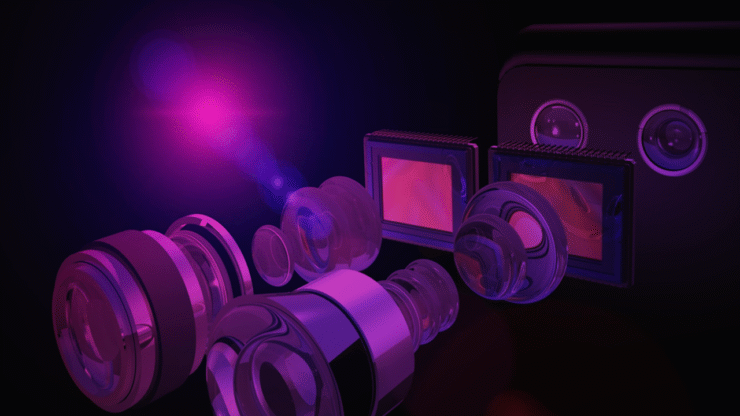
The main skills that an optical design specialist must have include:
1. Proficiency in Optical Simulation and Ray Tracing
Ray tracing is at the heart of optical design. It allows specialists to predict how light rays will travel through a system of lenses or mirrors. By simulating these interactions, designers can optimize the performance of optical systems before building physical prototypes.
Software such as Zemax OpticStudio, Code V, and LightTools provides advanced tools for modeling complex optical behavior, from aberration control to illumination uniformity. A strong command of these programs helps specialists test multiple design scenarios, adjust parameters, and identify potential performance issues early in the process.
2. Mastery of Optical Design Software
Beyond ray tracing, modern optical engineers rely heavily on software to streamline their workflows.
- Zemax OpticStudio excels in lens system optimization and tolerance analysis.
- Code V offers powerful optimization algorithms and manufacturing support features.
- LightTools specializes in illumination design for LED lighting, displays, and automotive systems.
Proficiency in at least one of these tools is essential, but familiarity with all three can provide a major competitive advantage. Understanding scripting languages such as MATLAB or Python for automation can also enhance productivity and data analysis.
3. Understanding Optical Materials and Manufacturing Constraints
Selecting the right optical material is crucial. Glass, plastic, and crystal materials all have distinct refractive indices, dispersion properties, and temperature sensitivities. Specialists must know how these factors influence light transmission and system performance.
Additionally, understanding manufacturing tolerances—the small deviations that occur during production—is vital. Designers need to create systems that maintain performance despite these imperfections. A practical understanding of fabrication processes, such as lens molding, coating deposition, and surface polishing, helps ensure that designs can be realistically produced at scale.
4. System Optimization and Performance Analysis
Optimization is the iterative process of refining a design to meet multiple performance objectives—sharpness, efficiency, weight, and cost. Optical design specialists use merit functions and multi-variable optimization algorithms to fine-tune curvature, spacing, and material combinations.
Equally important is the ability to interpret Modulation Transfer Function (MTF), encircled energy, and spot diagrams, which measure how well a system focuses or transmits light.
See also : Top 10 Universities for Optical Science and Engineering Degrees Worldwide
5. Integration with Mechanical and Electronic Systems
In many modern products, optical systems are integrated with electronic sensors and mechanical housings. For instance, a camera lens must align precisely with its image sensor to ensure sharp focus and minimal distortion. Optical design specialists therefore collaborate closely with mechanical and electronic engineers to ensure that alignment tolerances, heat management, and assembly constraints are well accounted for.
Essential Soft Skills for Optical Designers

While technical expertise is indispensable, soft skills often determine how effectively a specialist contributes within a team or leads a project.
1. Communication and Collaboration
Optical systems rarely exist in isolation—they are part of larger mechanical, electronic, or software-driven products. Clear communication allows optical designers to translate complex optical jargon into actionable insights for cross-functional teams. Collaboration also extends to suppliers and manufacturers, ensuring that production aligns with design intent.
2. Analytical Thinking and Problem-Solving
Optical design is a highly iterative process. Unexpected aberrations, tolerance stack-ups, or material inconsistencies can arise at any stage. A strong analytical mindset enables specialists to diagnose issues quickly and find practical, physics-based solutions. The ability to think critically and approach challenges creatively often distinguishes a competent designer from an exceptional one.
3. Continuous Learning and Adaptability
Optical technology evolves rapidly with the advancement of materials science, nanofabrication, and computational imaging. Specialists must stay updated with new methods, such as freeform optics, metasurfaces, and computational holography. Engaging in professional development, attending technical conferences, and reading scientific journals are excellent ways to remain competitive in the field.
4. Attention to Detail and Precision
Optical systems depend on accuracy down to microns. A small deviation in curvature or alignment can drastically degrade performance. Successful optical design specialists exhibit exceptional attention to detail—verifying every parameter, simulation setting, and tolerance specification before finalizing a design.
Optical design specialists play a vital role in advancing technologies that shape our modern world—from precision medical instruments to high-speed communication systems and advanced imaging devices. As industries increasingly depend on light-based innovations, those who cultivate these essential skills will not only design better optical systems but also illuminate the path toward a more connected, intelligent, and visually dynamic future.
Frequently Asked Questions
What does an optical design specialist do?
They design and optimize systems that manipulate light—like lenses, sensors, and lasers—used in imaging, communication, and photonics.
What software is essential for optical designers?
Key tools include Zemax OpticStudio, Code V, and LightTools for ray tracing and system analysis.
Are programming skills necessary?
Yes, basic scripting in MATLAB or Python helps automate simulations and analyze data.
What industries hire optical specialists?
Telecommunications, aerospace, medical imaging, and consumer electronics.
Which soft skills matter most?
Communication, problem-solving, and collaboration.
How can one advance in this career?
By mastering technical tools, staying updated, and gaining interdisciplinary experience.